Artify
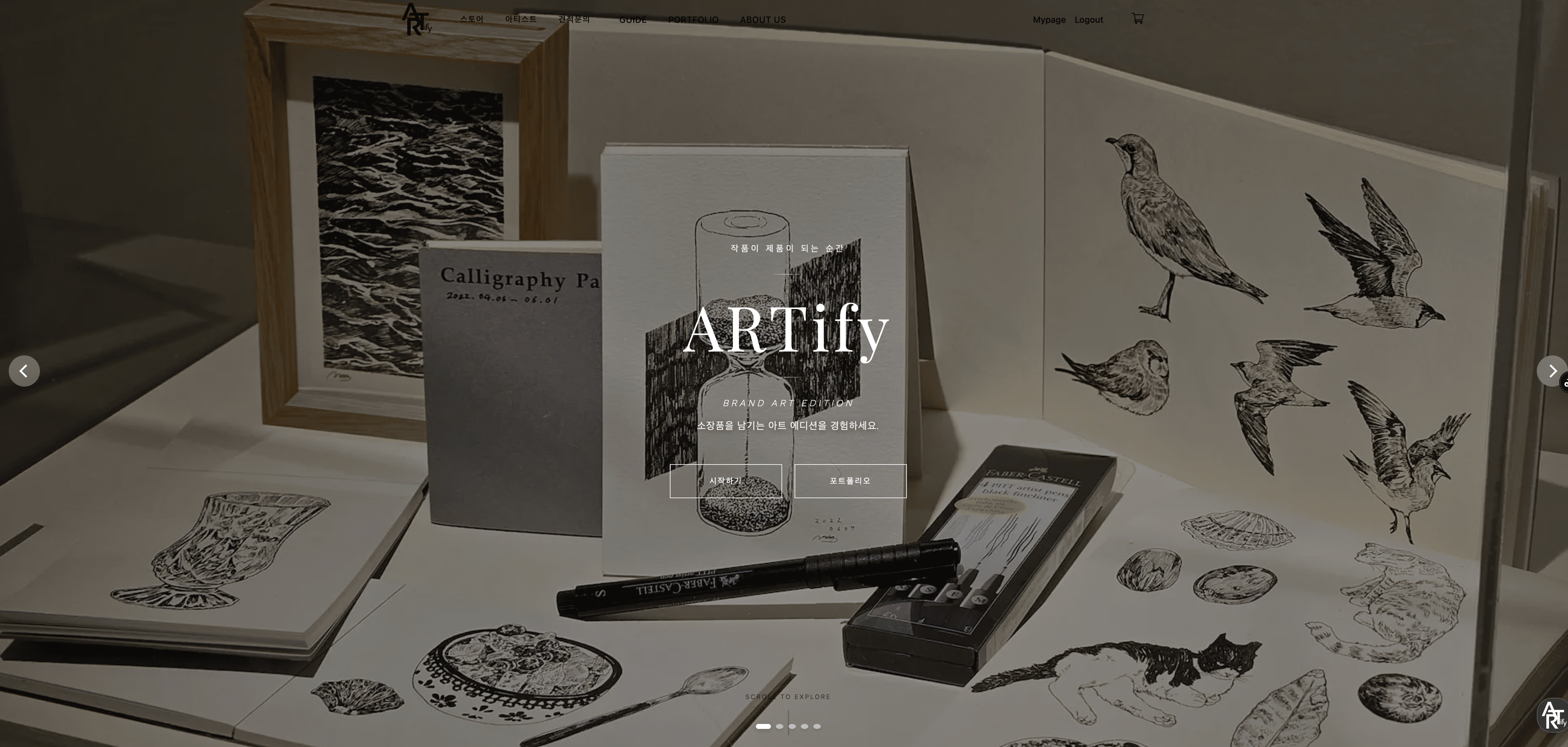
DESCRIPTION
AI-driven Art Commerce Platform
DURATION
Aug 20, 2025 - Feb 13, 2026
MY ROLE
- Full Stack Engineer: Designed Supabase-based DB schema (10+ tables), implemented Edge Functions APIs, and led frontend business logic implementation.
- AI Service Architect: Integrated FAL.AI API and designed product/style image blending logic and prompt engineering for high-quality mockups.
- DevOps: Built Vercel deployment pipelines, managed environment secrets, and configured domain DNS for stable operation.
TECH
HTML5 · CSS3 · JavaScript (ES6+) · Semantic HTML
Next.js · React · Tailwind CSS
Supabase (PostgreSQL) · Supabase Edge Functions · Supabase Auth · Node.js · Express.js
FAL.AI (FLUX.2) · Portone Payment SDK
Vercel
Project Purpose
Artify is a B2B art platform where the brokerage is the least interesting part. Generative AI — FAL.AI FLUX.2 — renders the imagery a brand is describing while it is still describing it, then puts an artist against that image. An abstract requirement becomes a product mockup in real time, and the commerce logic underneath stays light by running serverless. The work was to make something this experimental behave predictably from first brief through to payment.
Scope
- · Full-stack web application development
- · Generative AI (FAL.AI) pipeline build
- · E-commerce & payment system integration
- · Admin dashboard development
Key Technical Features
Advanced AI Generation Pipeline
- · Migrated from DALL·E 3 to FAL.AI FLUX.2 Edit API to significantly improve image generation quality and latency.
- · Combined product and style images with dynamic prompt injection so operators can define mockup prompts and generate high-precision product visuals in real time.
- · Used Supabase Edge Functions to enforce per-user daily rate limits, enabling cost-efficient AI usage governance.
Serverless E-commerce Architecture
- · Implemented Supabase Edge Functions for critical commerce logic such as payment verification (Portone) and AI generation requests.
- · Cross-checked order amounts between Supabase DB and PG provider to prevent tampering and ensure secure payments.
- · Applied PostgreSQL Row Level Security (RLS) policies to strictly separate data access between users, admins, and artists.
Integrated Admin Dashboard
- · Built a Next.js-based admin console where operators can manage orders, shipping status, AI matching options, and prompts without developer intervention.
- · Linked user requests and generated AI images in real time to support a responsive operations workflow.
Design Points
Minimalist Art Canvas
A gallery-like interface that removes visual noise so artwork and AI-generated images can stand at the center of the experience, with whitespace-driven layouts for B2B clients to focus purely on imagery.
Interactive Motion & Feedback
Mouse-tracking hover interactions and subtle transitions built with CSS3 and JavaScript to make the platform feel like a living exhibition. Generative loading UI communicates brand identity and progress while AI images are being created.
Seamless Responsive Experience
An adaptive grid system that keeps artwork listings and AI panels in balanced proportions across mobile, tablet, and desktop for a seamless responsive UX.
Gallery
Click to enlargeFAQ
How is a 3D interactive website different from a regular one?
It runs Three.js and WebGL in the browser, so objects move and respond to the cursor and scroll. A regular site organises information; an interactive one delivers the brand as an experience. It pays off most in fashion, beauty, architecture and exhibitions.
How long does a website take to build?
Seven days for a landing page, fifteen for a five-page company site, thirty for a ten-page 3D interactive build. The clock starts when your material arrives and shifts with design feedback. If a date is fixed, say so at the first call and feasibility is checked first.
Are hosting, domain and server costs separate?
SSL certificate, hosting setup and database provisioning are included at no cost. You only pay for the domain, about ₩20,000–30,000 a year. Accounts are created in your name from the start, so nothing lapses when staff change.
Can I edit the content myself after launch?
An admin page is built alongside the site, so text, images and posts can be edited without development knowledge, and a manual is handed over at delivery. Only structural changes or new features need development.